


been going through the ML 101 chapter here on leetcode over the past couple weeks alongside a few papers and wanted to drop some notes that might help others who got confused on the same spots i did
the supervised vs unsupervised split is explained cleanly but one thing i kept second guessing myself on — the chapter describes semi-supervised learning as just combining both but in practice the order matters a lot. you usually run unsupervised clustering first to narrow the scope then apply your labeled data within those clusters. flipping the order gives noticeably worse results in my testing on the iris dataset
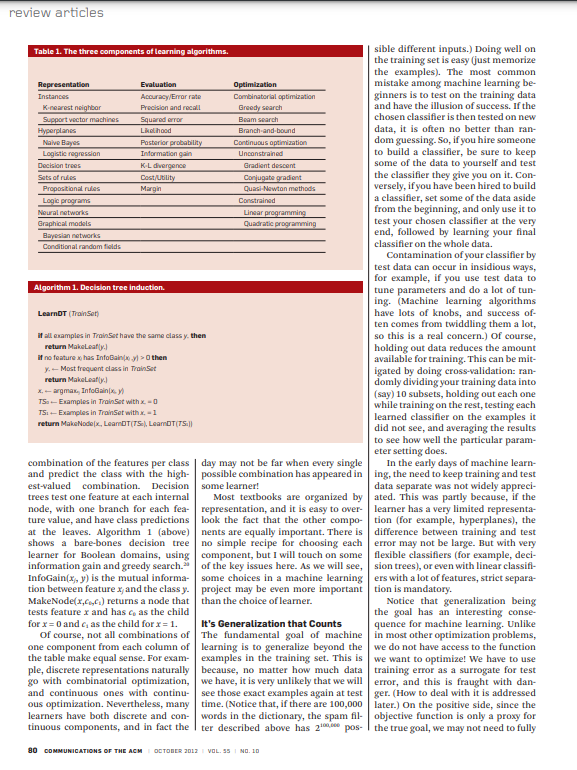
on bias vs variance the dart board analogy is solid but the chapter skips over one practical thing. tuning max_depth in a decision tree is the clearest hands on way to actually see the tradeoff move in real time. low depth = high bias low variance. no depth cap = low bias high variance on training but brutal on test data. worth just running it yourself
also on the regression vs classification section — the logistic regression naming thing trips up a lot of people including me at first. the name says regression but it is a classification model. the output is a probability 0 to 1 but you threshold it to get a class label. the chapter does mention this but kind of buries it
one correction on the workflow section. it says we split data into training and testing but skips validation entirely. in most real setups you have three splits: train, validation, test. validation is what you actually tune hyperparameters against. using test data for tuning is data leakage and your accuracy numbers will be misleading
papers worth reading alongside this chapter:
Fisher 1936 on the iris dataset is cited in the chapter itself — actually worth skimming
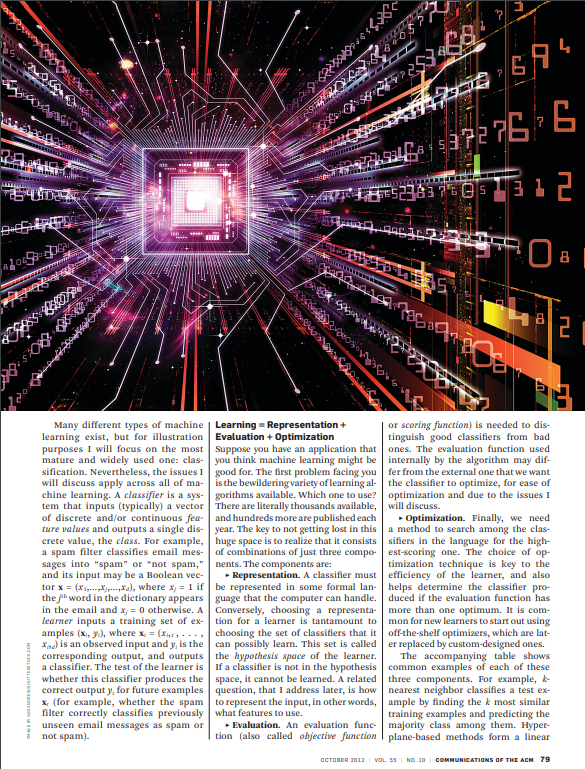
Pedro Domingos 2012 "a few useful things to know about machine learning" is short and directly referenced in the bias variance section and fills in a lot of gaps
overall solid intro chapter. the silver bullet section at the end is underrated — most beginners skip it
[https://homes.cs.washington.edu/~pedrod/papers/cacm12.pdf](the paper)