

📌📌 Graph Data Structure Best resource for interview [ NOTES + PROBLEMS ] in C++

1737
Introduction to Graphs
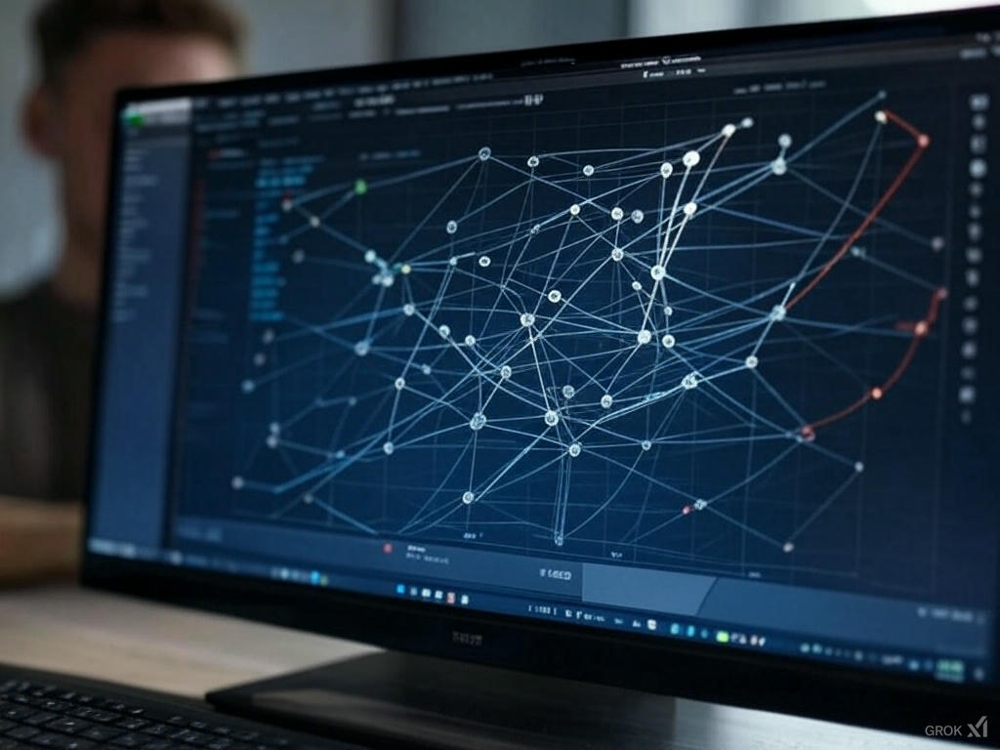
A graph is a collection of vertices (nodes) connected by edges (links). It is used to model relationships between objects, such as social networks, road maps, and computer networks.
1. Types of Graphs
- Directed Graph (Digraph): Edges have direction (A → B).
- Undirected Graph: Edges have no direction (A ↔ B).
- Weighted Graph: Edges have weights (costs).
- Unweighted Graph: All edges have equal weight.
- Cyclic Graph: Contains at least one cycle.
- Acyclic Graph: No cycles (like trees).
- Connected Graph: All vertices are reachable.
- Disconnected Graph: Some vertices are isolated.
- Bipartite Graph: Nodes can be divided into two independent sets.
2. Graph Representations
2.1 Adjacency Matrix
- Uses a 2D array (
adj[n][n]), wherenis the number of vertices. adj[i][j] = 1if an edge exists, else0.- Space Complexity: O(V²) (not efficient for sparse graphs).
2.2 Adjacency List
- Uses an array of lists (
vector adj[n]). - More memory-efficient than an adjacency matrix.
- Space Complexity: O(V + E).
3. Graph Traversal Algorithms
Graph traversal is used to explore all the vertices and edges.
3.1 Breadth-First Search (BFS)
- Explores all neighbors before going deeper.
- Uses a queue (FIFO).
- Time Complexity: O(V + E).
3.2 Depth-First Search (DFS)
- Explores deep paths first.
- Uses a stack (LIFO) or recursion.
- Time Complexity: O(V + E).
4. Shortest Path Algorithms
Used to find the shortest distance from a source vertex to all other vertices.
4.1 Dijkstra’s Algorithm (Greedy)
- Finds the shortest path in weighted graphs (non-negative weights).
- Uses a priority queue (min-heap).
- Time Complexity: O((V + E) log V).
4.2 Bellman-Ford Algorithm
- Finds the shortest path in graphs with negative weights.
- Uses relaxation technique (V-1 iterations).
- Time Complexity: O(VE).
4.3 Floyd-Warshall Algorithm
- Used for all-pairs shortest path.
- Time Complexity: O(V³) (not efficient for large graphs).
5. Minimum Spanning Tree (MST) Algorithms
Used to find the minimum cost tree that connects all vertices.
5.1 Kruskal’s Algorithm
- Greedy algorithm that picks the smallest edge first.
- Uses Disjoint Set Union (DSU).
- Time Complexity: O(E log E).
5.2 Prim’s Algorithm
- Greedy algorithm that grows MST from any vertex.
- Uses priority queue (min-heap).
- Time Complexity: O((V + E) log V).
6. Cycle Detection in Graphs
6.1 Cycle Detection in Undirected Graph
- Using DFS: If a visited node appears again (except its parent), there’s a cycle.
6.2 Cycle Detection in Directed Graph
- Using DFS and Recursion Stack: If a node appears in the recursion stack, a cycle exists.
- Using Kahn’s Algorithm (Topological Sorting).
7. Topological Sorting (for DAGs)
- Used for scheduling tasks, course prerequisites, etc.
- Only valid for Directed Acyclic Graphs (DAGs).
- Algorithms:
- DFS-Based (Using Stack): O(V + E)
- Kahn’s Algorithm (Using In-degree): O(V + E)
8. Strongly Connected Components (SCCs)
Used to find strongly connected subgraphs in directed graphs.
- Kosaraju’s Algorithm:
- Perform DFS to get finishing times.
- Reverse the graph.
- Perform DFS again on reversed graph.
- Time Complexity: O(V + E).
9. Other Important Graph Algorithms
9.1 Bipartite Graph Check
- Using BFS/DFS with 2-coloring technique.
9.2 Bridges in Graph (Tarjan’s Algorithm)
- Used in network reliability analysis.
9.3 Eulerian Path & Circuit
- Eulerian Path: Uses each edge exactly once.
- Eulerian Circuit: Starts and ends at the same vertex.
9.4 Hamiltonian Path & Circuit
- Visits each vertex exactly once.
10. Graph Problem List
10.1 Basics of Graph
1-1 Simple DFS/BFS
1-2 Count Degrees
1-3 Topological Sorting
1-4 Connected Component/Union Find (Disjoint-set)
1-5 Bipartite
10.2 Medium Level Topics
2-1 BFS Variants
2-2 Shortest Path - Dijkstra Algorithm
2-3 Shortest Path - Bellman-Ford Algorithm
2-4 Shortest Path - Floyd-Warshall Algorithm
2-5 Cycle Detection
2-6 Minimum Spanning Tree - Kruskal's Algorithm
10.3 Advanced Level Topics
- Euler Tour, De Bruijn Sequence, Game on Graph, Tarjan's Algorithm, DP Applications, etc.
Comments (1)