


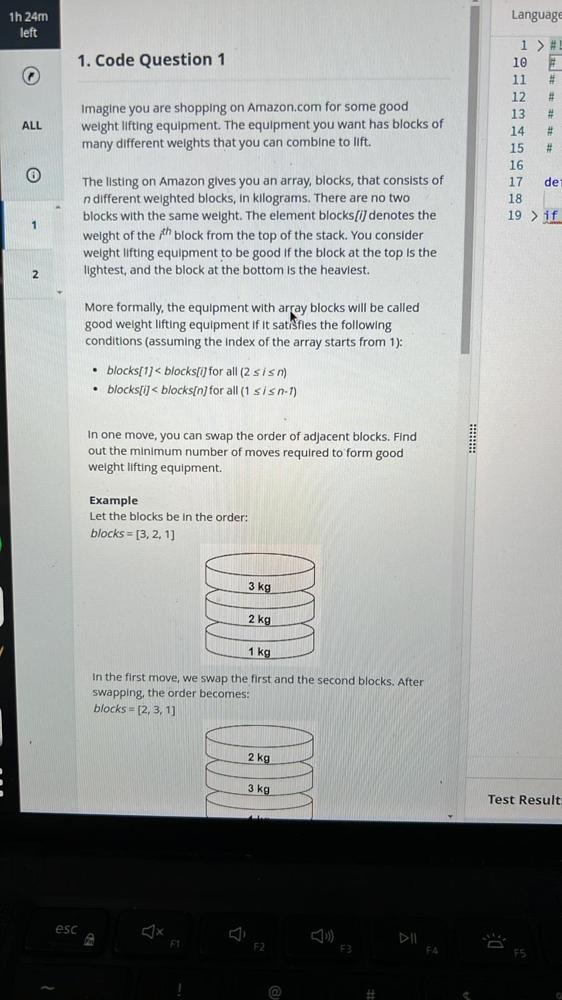
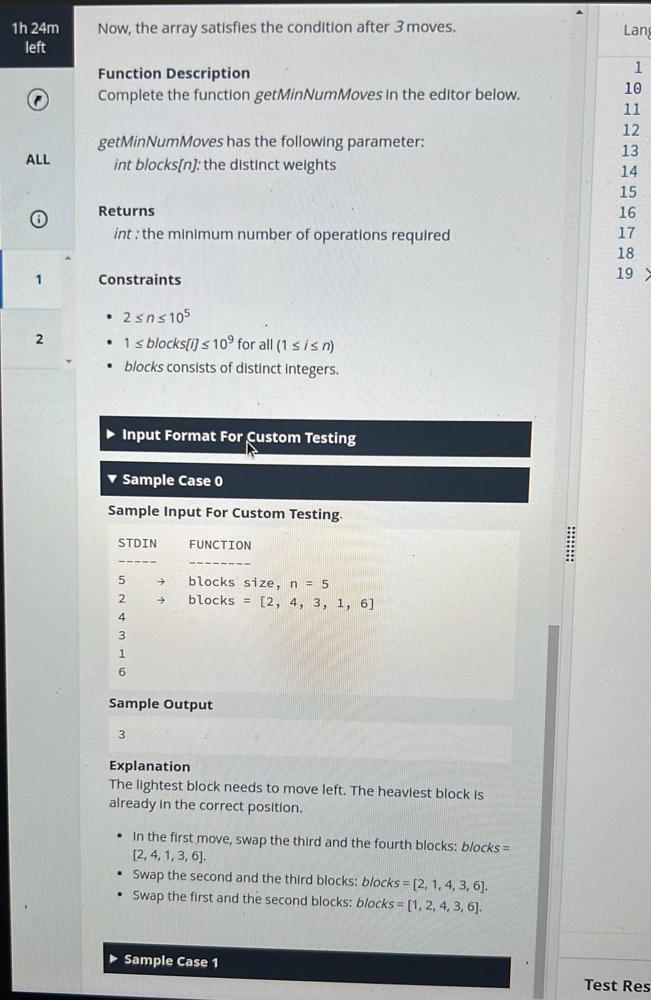
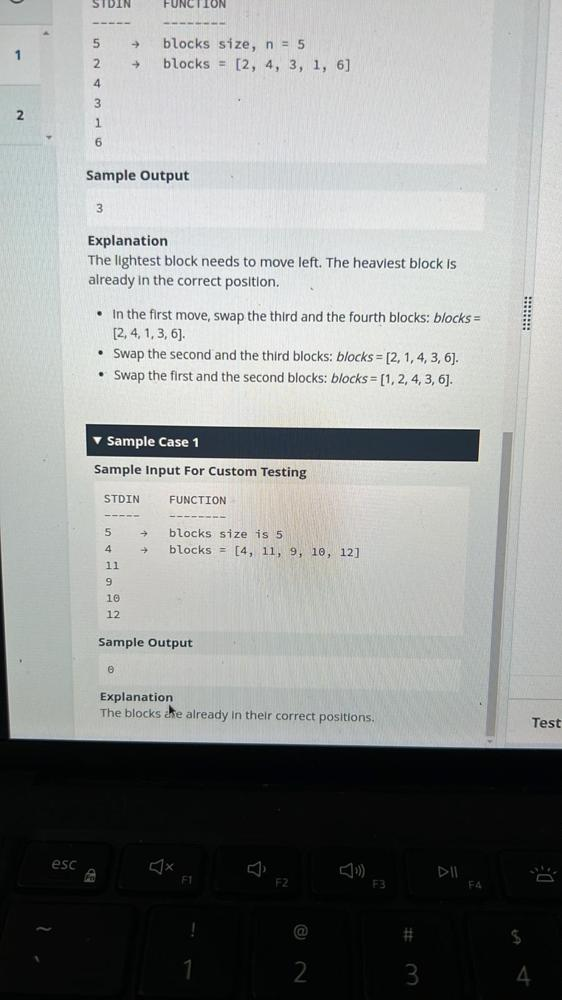
Solution of first question is :
import java.util.Scanner;
import java.util.Stack;

public class OaFirst {

    public static int f(int a[] , int n){
        if(n == 0 || n == 1) return n;

        Stack <Integer> st = new Stack<>();
        st.push(a[0]);
        int count = 0;
        for(int i = 1; i < n; i++){
            int firstElement = a[i];


            if(firstElement >= st.peek() ) st.push(firstElement);
            else {
                int temp = st.pop();
                st.push(firstElement);
                st.push(temp);
                count++;
            }
        }

        while(!st.isEmpty()){
           int temp = st.pop();
           if(st.size() != 0)
           if(temp < st.peek() ) count++;
        }

        return count;
    }
    public static void main(String[] args) {
        System.out.println("entet the size of an array");
        Scanner sc = new Scanner(System.in);

        int n = sc.nextInt();
        System.out.println("enter the element of an array");
        int a[] = new int[n];

        for(int i = 0; i < n; i++) a[i] = sc.nextInt();

        System.out.println("ans is : " + f(a , n));

        // 5
        // 2 4 3 1 6
    }
}
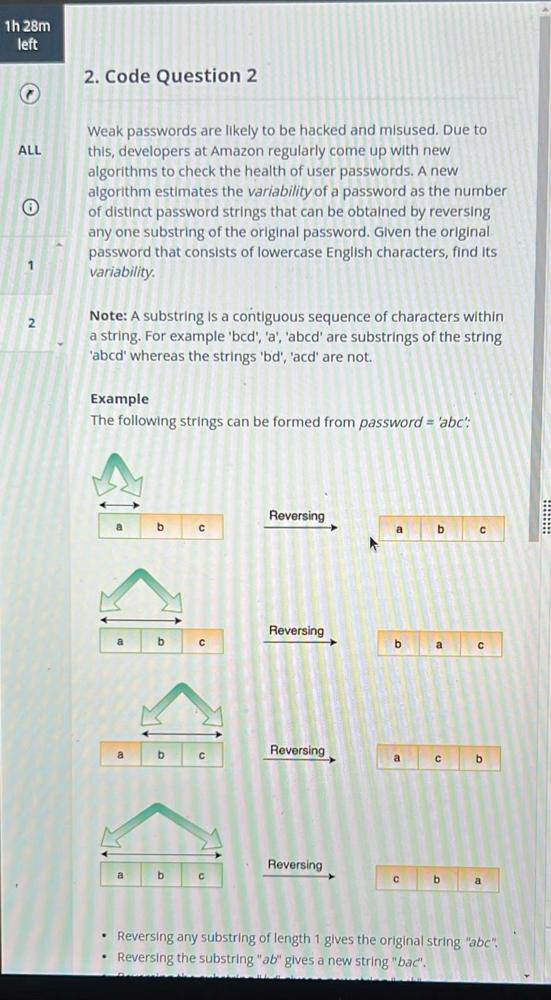
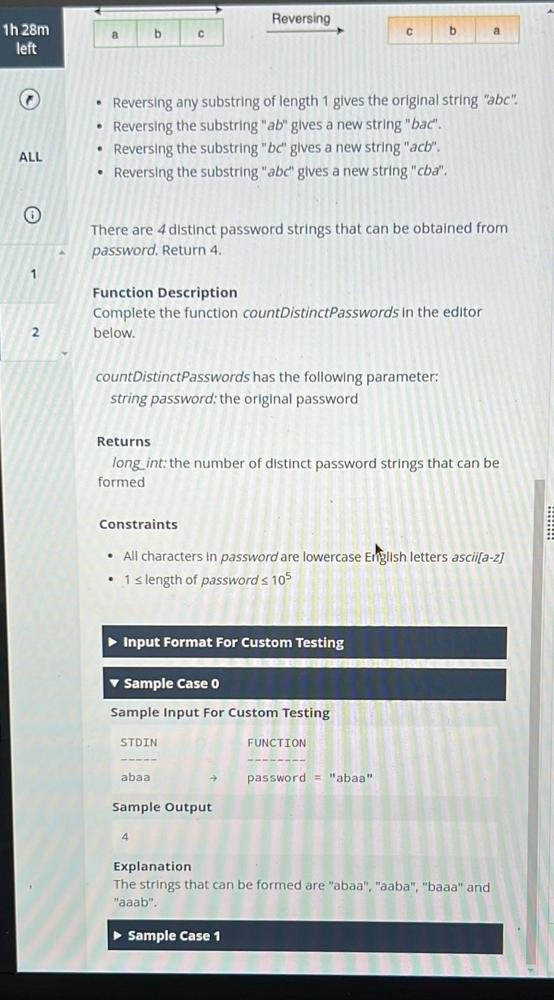
import java.util.HashSet;
import java.util.Scanner;

public class OaSecond {

    public static int calculateVariability(String str, int n) {
        if (n == 0 || n == 1) return n;
        HashSet<String> uniqueStrings = new HashSet<>();

        for (int i = 0; i < n; i++) {
            for (int j = i; j < n; j++) {
                StringBuilder sb = new StringBuilder(str);
                String sub = sb.substring(i, j + 1);
                StringBuilder reversedSub = new StringBuilder(sub).reverse();
                sb.replace(i, j + 1, reversedSub.toString());
                uniqueStrings.add(sb.toString());
            }
        }
        return uniqueStrings.size();
    }

    public static void main(String[] args) {

        Scanner sc = new Scanner(System.in);
        String str = sc.nextLine();
        int n = str.length();
        int ans = calculateVariability(str, n);
        System.out.println("answer is : " + ans);
    }
}
Comments (3)